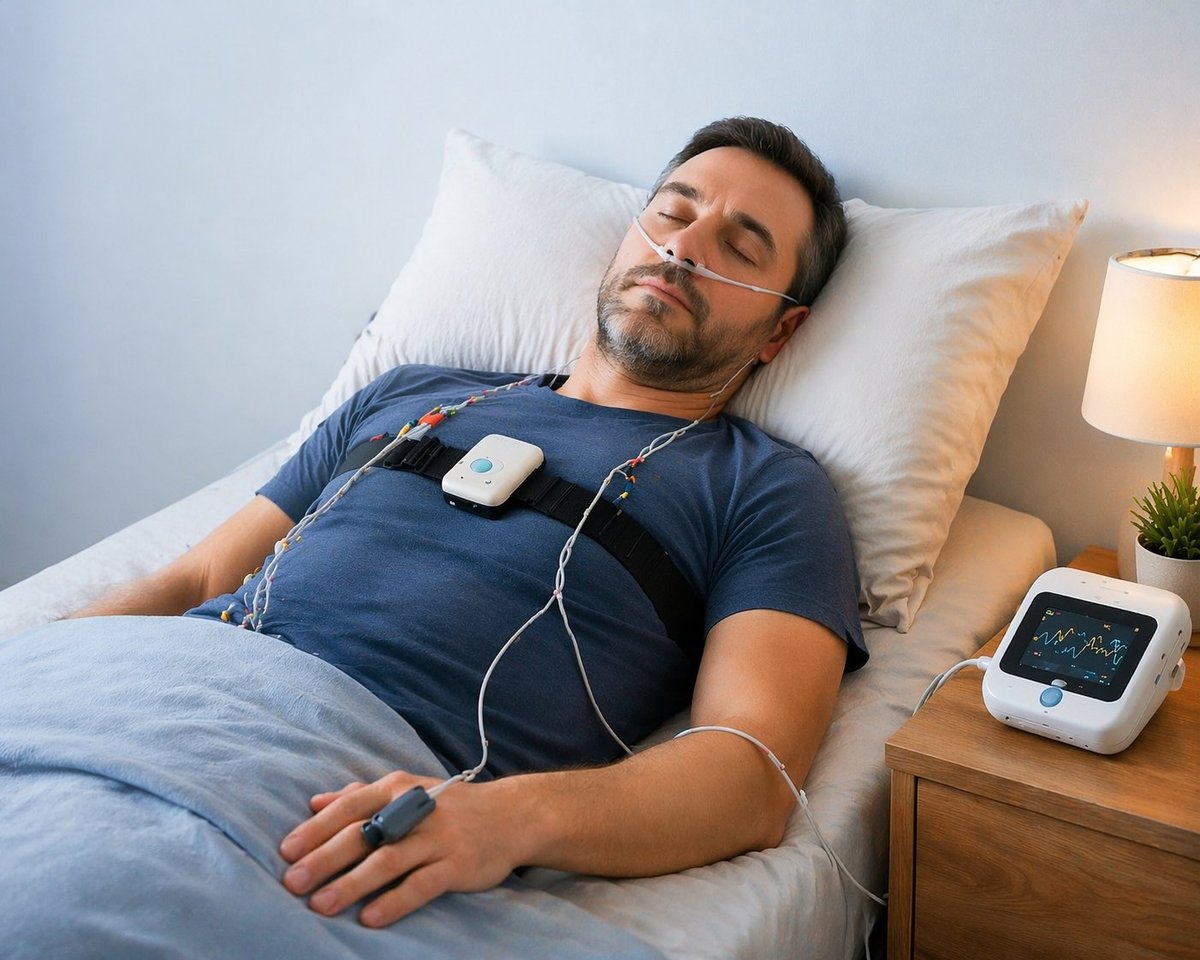
Sleep apnoea screening by nocturnal home recording. Reading and interpretation by our cardiologists.
The respiratory polygraph is the reference examination for detecting obstructive sleep apnoea-hypopnoea syndrome (OSAHS). It records several physiological parameters during sleep: airflow, respiratory efforts, blood oxygen saturation and heart rate.
The device, light and discreet, is fitted at the practice at the end of the day. You sleep at home with it and return it the following morning for analysis.
In the late afternoon, your cardiologist gives you the polygraphic device and explains how to fit it yourself for the night: nasal sensor, chest belt, finger oximeter. Setup takes approximately 15 minutes.
You return home, fit the device according to the instructions and sleep normally. The recording starts automatically and lasts all night. There is no need to change your sleep habits.
The following morning, you return the device to the practice. The cardiologist analyses the recording, calculates the apnoea-hypopnoea index (AHI) and provides you with a detailed report including therapeutic recommendations if required.
The cardiology centre works with approved providers who deliver, install and commission the CPAP device directly at the patient's home, with personalised support to help them get started with the treatment.